
Last updated on February 19, 2026
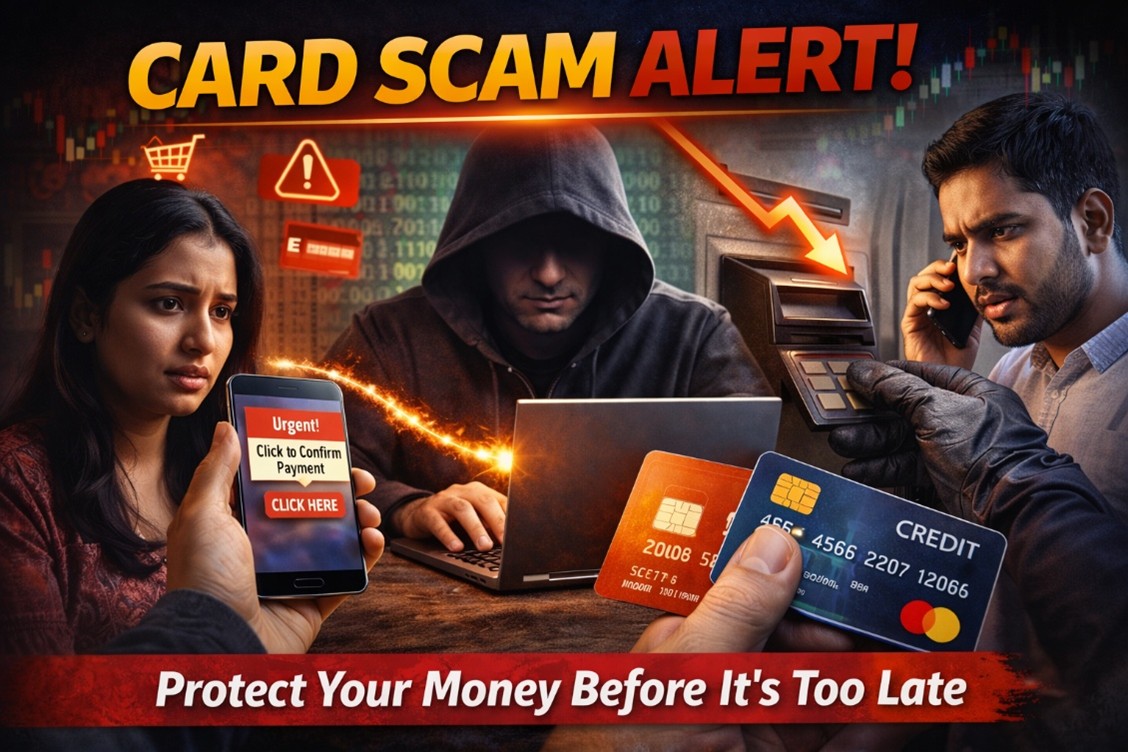
The Masterminds Behind Card Scams —What You Should Know Now
It was just another day.
Alia wanted to buy a pair of shoes online.
The price looked good. The seller seemed real.
She entered her debit card details and clicked Pay. Then a notification appeared:
“The payment gateway is temporarily down due to a troubleshoot.”
Just a split second later, she received a text message:
“Click this link to access the payment gateway.”
Without thinking, she clicked and the page made a “beep” sound. The payment went through.
Later, she received another message:
“Payment of Rs. 2,200 was made on your card.”
But she hadn’t made that payment.
Through the day, more small charges appeared.
Then another.
Each deduction was small, just a few hundred rupees, so she ignored them.
By the end of the week, her account was far lower than she expected.
All because of a card scam and in less than a few minutes, her money was gone.
Why Card Scams Are So Common Today
Debit cards and credit cards have become part of daily life.
People use them for:
- Shopping
- Online payments
- Booking services
- Paying bills
As card usage increases, scams related to cards also increase. These scams are happening all over the world and Sri Lanka is no exception. Many people are still new to digital payments, which makes scammers’ jobs easier.
What Is Card Scam? (In Simple Terms)
A card scam happens when someone uses your debit or credit card details without your permission.
This can happen even if:
- Your card is with you
- You didn’t share it knowingly
- You didn’t lose your wallet
All scammers need is your card information.
Common Ways Card Scams Happen
-
-
-
- Fake Online Shops
Some websites or social media pages look like real shops. They sell clothes, electronics, tickets, or services at attractive prices.
Once you enter your card details:
- The scammers save the information
- They may disappear
- They may continue using your card later
- Social Media Selling Scams
Many scams now happen through Facebook, Instagram, WhatsApp, or messaging apps.
After payment:- The seller stops replying
- The page disappears
- The buyer receives nothing
- Phishing Messages and Fake Alerts
You may receive messages saying:
- “Your card is blocked”
- “Suspicious activity detected”
- “Verify your payment urgently”
These messages create fear, so people act quickly without checking.
- Fake Phone Calls
Some scammers pretend to be:
- Bank officers
- Customer service agents
- Authorities
- Fake Online Shops
They ask for:
-
-
- Card numbers
- OTP codes
- CVV numbers
-
Banks never ask for these details.
-
-
New and Advanced Card Scams People Should Know About
Card scams today are smarter and harder to notice.
✦︎ Small, Repeated Charges
Scammers often start with small amounts; Rs. 100, Rs. 300, Rs. 500. Many people ignore small deductions, thinking it’s a service charge of the bank. That’s how scammers continue without being caught.
✦︎ Fake Payment Pages
Some websites redirect users to fake payment screens that look real. Once card details are entered, scammers can use them anytime. These scams happen in Seconds; one click, one message, one moment of trust, that’s all it takes to lose money.
Why this is a Serious Issue
Digital payments are growing fast in South Asian Region especially in Sri Lanka. But awareness has not grown at the same speed.
This gap allows scammers to:
- Target new users
- Take advantage of trust
- Steal money quietly
Anyone can be a victim; young or old, educated or not.
How to Protect Yourself
You don’t need technical knowledge. Simple habits can protect your money.
✅ Check Websites Carefully
Avoid entering card details on unknown or suspicious sites.
✅ Never Share OTP or CVV
No bank will ever ask for these details.
✅ Monitor Your Transactions
Check your bank messages and statements regularly — even small amounts matter.
✅ Enable Alerts
SMS or app notifications help you notice problems immediately.
✅ Act Quickly
If you see an unknown transaction:
✔️ Contact your bank immediately
✔️ Block the card if needed
-
Keep in Mind
Card scams don’t pick their victims, but you can pick your defense.
Being aware is not hard, it’s powerful.
Pause. Think. Share.
One small step today can protect a lot of people tomorrow.References:
- https://www.mastercard.com
- https://timesofindia.indiatimes.com
- https://finance.yahoo.com/news/