
Last updated on February 20, 2026
Names and places mentioned herein are hypothetical.
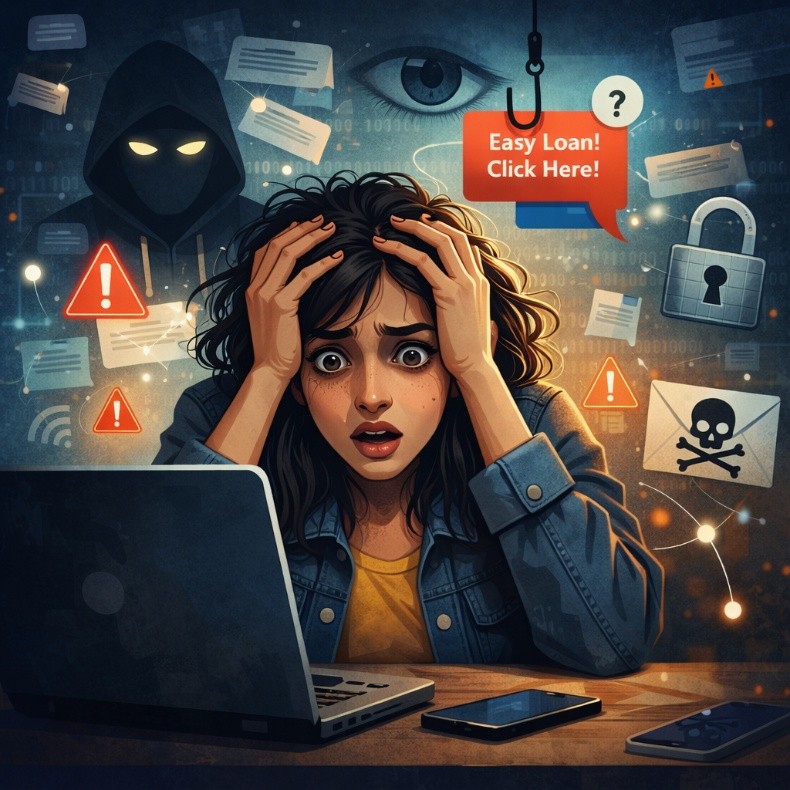
Malika is a 25-year-old university student who is also working, trying to balance her studies, career, and personal life. She always believed that being aware means being safe. She closely followed technology news, cybercrime alerts, and online safety updates. Among her friends, she was known as the one who “knows too much.” They jokingly called her “Robotikka,” saying her mind worked faster than a hacker.
At first, this awareness made her feel confident and responsible. She adjusted her privacy settings, avoided unnecessary online sharing, and stayed alert. But slowly, without her even realizing it, awareness turned into worry and worry quietly grew into fear.
A single thought began looping in her mind:
“What if I become the next victim?”
Malika gradually pulled away from social media: She stopped posting, stopped chatting, and eventually stopped logging in altogether. Even outside her phone, the world also began to feel unsafe. Stepping out of her home became stressful, as if danger existed everywhere. Home slowly became the only place where she felt protected.
Managing both university and work became harder. She repeatedly requested permission from her workplace to work from home, not out of laziness, but fear. When her request was declined due to company policies and the nature of her role, she continued reporting to work, carrying anxiety with her every single day.
On the streets and public transport, Malika avoided eye contact. A simple glance from a stranger made her heart race.
“What if my photos are already online, altered or shared in ways I never intended?”
“What if someone steals my phone and uses it for scams?”
“What if I’m already trapped in something illegal without knowing?”
These thoughts followed her into lecture halls and office spaces alike.
At work, Malika stopped trusting people she once spoke too freely. She especially feared colleagues in the IT department, convincing herself that they could be part of a larger cybercrime network. Every night, she resets her passwords, sometimes more than once. Sleep became difficult unless everything felt “secure.”
Soon, Malika left all her WhatsApp groups: office groups, university groups, even friendly chats. She replaced her smartphone with a small pocket phone, believing that less technology meant more safety. Slowly, she stopped meeting friends. Calls went unanswered. Messages were ignored. Without noticing, isolation became her new routine.
Her friends sensed that something was wrong. One of her closest colleagues contacted Malika’s mother out of concern. Her mother shared that Malika had thrown away the smartphone at home and discouraged her from using mobile phones or social media. Fear had followed her even into her home.
One day, Malika received a common promotional message about an online loan. For many, it would have been easy to ignore. But for Malika, it felt like proof.
She panicked.
“I knew it. They have my details. I’m a victim now.”
She spoke about reporting to the police immediately. About leaving the city. About giving up everything just to feel safe again.
Her colleague gently explained that she too had received a similar message earlier and that such messages are common. She reminded Malika that the safest response is simply not clicking unknown links. But fear had already taken control, leaving little room for logic.
Realizing that this was no longer just caution, her colleague came across a Hithawathi awareness video on TikTok and reached out for support. When Malika connected with Hithawathi, she was finally able to speak without being judged. Hithawathi listened patiently as she shared her fears, sleepless nights, and constant sense of danger. She was gently reminded that while cyber threats do exist, living in constant fear steals peace, focus, and relationships. Since Malika had already taken strong safety measures, she was reassured that there was no immediate threat. Noticing her high levels of anxiety and panic, Hithawathi referred her to Sumithrayo for further mental health support.
Malika’s story reminds us that awareness should protect us not imprison us.
And that asking for help is a sign of strength, not weakness.
Precaution Tips:
Balance awareness with wellbeing
Constant exposure to cybercrime news can increase anxiety. Take breaks when needed.
Pause before reacting
Not every alert / message signals danger. Give yourself time to think.
Never click unknown links
Scam and promotional messages are common. Delete those without engaging.
Use smart security habits
Strong passwords and two-factor authentication are effective; excessive changes can increase stress.
Stay connected
Isolation increases fear. Keep in touch with trusted friends or family.
Seek help early
If fear affects your studies, work, or daily life, reach out to organizations that provide counselling such as: